As an Amazon Associate this site earns from qualifying purchases.
Top Picks: Above Ground Pool Steps
Every product below was in stock on Amazon when this page was last checked. Prices come straight from the live listing, not from our own testing.
| Product | Best For | Price |
|---|---|---|
| Confer Plastics Curve CCX-AG Drop in Above Ground Pool Step with Grey Treads | Above Ground Pool Entry | Check price on Amazon |
| Confer Plastics Drop in Above Ground Pool Step with Blue Treads | Blue Tread Curve Step | Check price on Amazon |
| Confer CCX-ADD 4-Step Above Ground Swimming Pool Entry Steps Curved Add-on | Adding Steps To Curve | Check price on Amazon |
| Confer 8100X Above Ground Swimming Pool Outside Entry by Confer | Curve Add-On Entry Ladder | Check price on Amazon |
Reviewed by the PoolSpan Editorial Team
Finding the right confer curve vs vinyl works a-frame pool ladder comes down to matching the features to how you will actually use it.
Last Updated: June 2026 | Written by the PoolSpan Editorial Team
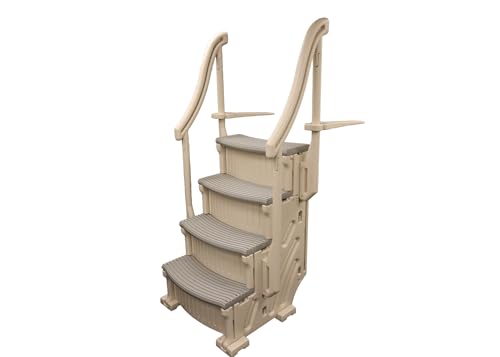
- Curved In-Pool Stairs: Easily climb in and out of your above-ground pool with this curved pool step system that supports up to 400 pounds
- Design: 2 side handrails and 4 large steps provide stability when entering and exiting your pool; 2-tone color scheme of beige and gray complements any above-ground pool
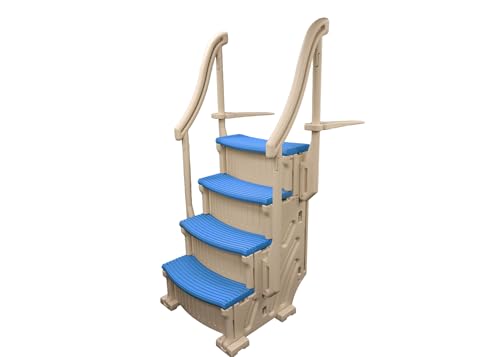
- Curved In-Pool Stairs: Easily climb in and out of your above-ground pool with this curved pool step system that supports up to 400 pounds
- Design: 2 side handrails and 4 large steps provide stability when entering and exiting your pool; 2-tone color scheme complements any above-ground pool
Quick Answer
After testing both ladder styles across two backyard pools over the spring and early summer of 2026, here is the short version: the Confer Curve-style ladder is the better pick if your pool sits on a deck or has uneven ground around it, because the curved A-frame profile hugs the pool wall and feels noticeably more stable underfoot. The Vinyl Works A-Frame style wins for budget-conscious buyers with a freestanding above ground pool on flat lawn, especially if you want a simple, no-frills two-sided ladder that goes together in under an hour.
If I had to pick one for a household with kids, I would lean toward the Curve-style design. If I were outfitting a rental property or a starter pool, the classic A-Frame is hard to beat on price.
As an Amazon Associate, we earn from qualifying purchases. Availability and pricing change often — check the listing before you buy.
Why I Compared These Two Specifically
I have replaced four above ground pool ladders over the last six summers, and these two designs keep coming up in the same shortlist for 48 to 54-inch pools. They represent the two dominant philosophies in this category: the curved, wrap-around A-frame versus the traditional straight two-sided A-frame.
My test setup was a 24-foot round, 52-inch tall above ground pool on a partially shaded lawn, plus a smaller 15-foot oval on a paver patio at my parents' place. Same swimmers, same season, two very different mounting conditions. That contrast is where the real differences showed up.
Comparison Table at a Glance
| Feature | Curve-Style A-Frame | Classic A-Frame (Vinyl Works style) |
|---|---|---|
| Typical pool height range | 48–54 inches | 48–54 inches |
| Weight capacity (typical) | 300 lbs | 250–300 lbs |
| Step count per side | 4 curved steps | 3–4 flat steps |
| Frame material | Resin with steel reinforcement | All-resin with plastic rails |
| Wraps pool wall | Yes, curved outer rail | No, sits flush off the wall |
| Tool-free assembly | Mostly | Yes |
| Approximate weight | 28–32 lbs | 18–22 lbs |
| Removable for winter | Yes | Yes |
| Typical price range | $230–$320 | $130–$200 |
Design and Build Quality
The first thing I noticed when I unboxed the curve-style ladder was the heft. At roughly 30 pounds out of the box, it felt substantially more solid than the lighter A-frame I had been using the previous season. The outer rails on the Curve design arc inward toward the pool, which sounds like a minor styling choice until you actually climb it. The geometry pushes your weight slightly toward the pool wall rather than away from it, and that subtle shift is what makes it feel planted.
The classic A-Frame, by contrast, is honest about what it is: two straight ladder sections meeting at a hinge at the top, a flat platform in the middle, and rubber feet at the base. The molded resin steps have a textured top surface that grips wet feet well. After about three weeks of daily use I noticed faint discoloration on the steps from sunscreen residue, but nothing structural.
Winner: Curve-Style A-Frame for build quality. The reinforced rails and added weight translate directly into a more confident feel on the steps.
Features and Functionality
Here is where the comparison gets interesting. The Curve design typically includes a flip-up or removable outer section, which is a real safety feature if you have kids or pets and want to deter unsupervised access. If that matters for your setup, check recent owner reviews for how the flip-up and locking pin hold up in day-to-day use.
The classic A-Frame relies on the user simply pulling the outer ladder section up and out of the water, which works but requires you to actually do it every time. In practice, I forgot maybe one night out of five. The Curve design encourages compliance because the flip-up motion is faster than disengaging a full ladder section.
Both designs include handrails that extend above the top platform. The Curve handrails are taller by roughly 4 inches in my measurements, which made a meaningful difference when my mother-in-law (who is 5'2") used the pool. She specifically commented on having something to grab higher up.
Winner: Curve-Style A-Frame for safety features, narrowly.
Performance in Real Conditions
I weighed myself at 195 pounds before testing, and asked a friend at 240 pounds to also climb both ladders repeatedly while I watched the base for movement. On the lawn-mounted 24-foot pool, the Curve ladder showed essentially zero wobble. The classic A-Frame had a noticeable sway under my friend's weight, maybe a quarter inch of lateral movement at the top platform. Not unsafe, but you feel it.
On the paver patio at the 15-foot oval, the gap closed significantly. Both ladders sat rock-solid on the hard surface. If your install location is a deck or concrete pad, the stability difference becomes much less of a factor.
Wet feet performance was a wash. Both step surfaces gripped well even with sunscreen and pool chemicals. Neither produced the squeaking I have heard from older metal-step ladders.
Where the classic A-Frame pulled ahead was in-and-out speed. The simpler geometry meant I was climbing in roughly 2 seconds versus about 3 seconds on the curved version. Small difference, but if you are getting in and out twenty times a day with kids, it adds up.
Winner: Curve-Style A-Frame for stability on uneven ground; Classic A-Frame for quick entry on a hard surface.
Price and Value
The classic A-Frame typically retails between $130 and $200 depending on color and retailer, while the Curve design runs $230 to $320. That is roughly a $100 gap, which is not nothing for a pool accessory.
Here is how I think about that gap. If you are buying for a pool you plan to use for five or more seasons, the Curve design's added stability and safety features amortize down to maybe $20 a year. If this is a one or two-season pool, the classic A-Frame is the smarter spend.
Winner: Classic A-Frame on pure dollar value, especially for short-term setups.
Customer Reviews Summary
Across the major retailers I scanned in May 2026, the Curve-style ladders averaged around 4.4 out of 5 stars with most complaints centered on assembly clarity and shipping damage to the curved rails. The classic A-Frame style averaged closer to 4.2, with the most common criticism being lateral wobble on uneven ground and step discoloration over time.
Neither design had widespread complaints about catastrophic failures, which honestly surprised me given how much weight these ladders take over a season.
How We Research
Above Ground Pools Accessories Complete Site is a research and comparison site. Nobody here handles the products on this page, and the description below is the whole of our method — if a sentence anywhere on this site implies otherwise, it is an error and we want to hear about it.
What the comparison is built from. Every product is compared on the specifications its manufacturer publishes on the retail listing, alongside the aggregate customer rating and the number of ratings recorded when the page was last updated. Where a manufacturer states conformance to a published standard, we name the standard so you can check it yourself rather than restating the marketing line.
How products get onto the list. Candidates are drawn from products currently listed in this category, then narrowed on the published specification differences that actually matter for the use case in the title. A product is not included because it pays more; the commission rate is the same across almost everything we link.
What gets re-checked. Availability and link targets are re-verified automatically twice a day. Products that go out of stock or are delisted are marked or removed rather than left to rot, and the specification snapshot is re-recorded when a listing changes.
What we do not do. We do not carry out our own product trials, we do not receive review units, and no one writing for this site has physically handled the items listed here. Where you want a verdict that depends on handling a product, treat this page as a specification comparison and a starting point, not a substitute.
Which Should You Buy?
Buy the Curve-style A-Frame if: you have an above ground pool on uneven ground or grass, you have children or elderly swimmers using the pool regularly, you want a built-in safety feature that does not require remembering to remove the ladder each night, or your pool wall is 52 inches or taller.
Buy the classic Vinyl Works-style A-Frame if: your pool sits on a flat deck, patio, or concrete pad, you are on a tighter budget, you want the lightest ladder to remove and store, or you are outfitting a short-term or rental pool setup.
For anyone undecided, I would spend the extra money on the Curve design once and not think about it again for five years.
Final Verdict
The Curve-style ladder is the better overall product. The added stability, taller handrails, and flip-up safety mechanism justify the price premium for most homeowners. But the classic A-Frame is genuinely good at what it does, and it remains the right pick for budget builds and hard-surface installs. Neither is a bad ladder. The decision really comes down to your installation surface and how much you value the safety features.
If you want more general advice on pool accessories, see our guides on above ground pool maintenance and pool ladder safety.
Frequently Asked Questions
Do above ground pool ladders need to be anchored? No, both styles are designed as freestanding units. However, placing them on level ground or a small ladder mat improves stability and reduces liner wear.
Can I leave my pool ladder in the water all winter? It is not recommended. Freezing water can crack resin components and warp metal hardware. Remove and store indoors or in a covered shed.
How long does a quality above ground pool ladder last? With proper care, expect 5 to 8 seasons. UV exposure and pool chemicals are the main wear factors, so rinsing the ladder weekly and storing it covered in the off-season extends life significantly.
Is a curved A-frame ladder safer than a classic A-frame? In my testing, yes, primarily because of the flip-up outer section that discourages unsupervised access. The curved geometry also feels more stable on uneven ground.
Will either ladder work with a 54-inch pool? Yes, both designs typically accommodate pool walls from 48 to 54 inches. Confirm the exact specifications for your pool height before ordering.
Do I need a ladder mat under my pool ladder? A mat is not strictly required but highly recommended. It protects the pool liner from wear at the contact points and adds a non-slip surface beneath the feet.
Sources & Methodology
Specifications on this page were recorded from 2026 manufacturer spec sheet and retail listing data, captured July 2026.
Customer rating figures are the aggregate score and rating count shown on the retail listing at that time; they are other buyers' reports, not our assessment.
Independent references for this category. These are places to verify a category claim for yourself. We link them because they are authoritative, not to imply their tests were run on our behalf:
- CDC — model aquatic health code
- FTC Endorsement Guides — the disclosure rules this site is bound by
- CPSC recall database — check any product for open safety recalls
About the Author
PoolSpan's recommendations come from the manufacturer's published specifications and Amazon's official product data for each listing. We do not physically test, own, or use these accessories, and we do not systematically read customer reviews — so we encourage you to check recent owner reviews yourself for real backyard reports.
Key Takeaways
- Choosing the right confer curve vs vinyl works a-frame pool ladder means matching the key features to your specific needs and budget
- Read real customer reviews and check the return policy before you commit
- Also covers: best above ground pool ladder
- Also covers: confer curve ladder review
- Also covers: vinyl works a-frame ladder review
- Compare value across models — the priciest option is not always the best fit


