As an Amazon Associate this site earns from qualifying purchases.
Top Picks: Pool Ladders
Every product below was in stock on Amazon when this page was last checked. Prices come straight from the live listing, not from our own testing.
| Product | Best For | Price |
|---|---|---|
| Vinyl Works SLA A-Frame 48 to 56 Inch Adjustable Above Ground Swimming Pool | Adjustable A-Frame Entry System | Check price on Amazon |
| Confer Plastics 7200 Roll Guard fits Above-Ground Pool Heights from 48" to | Lockable Safety Barrier Ladder | Check price on Amazon |
| VEVOR Swimming Pool Ladder | Heavy Duty 400 Lb Capacity | Check price on Amazon |
| Confer Plastics 6000X Heavy Duty Above Ground in-Pool Swimming Ladder for | Deck-Mounted In-Pool Access | Check price on Amazon |
| Intex Above Ground Steel Frame Swimming Pool Ladder for 42-in. Wall Height | Budget Steel Frame Pick | Check price on Amazon |
| Bestway Flowclear 52 Inch Versatile Metal A Frame Above Ground Swimming Pool | Double-Sided A-Frame Steps | Check price on Amazon |
Reviewed by the PoolSpan Editorial Team
When shopping for best above ground pool ladder, it pays to compare specs, capacity, and real-world runtime before committing.
As an Amazon Associate, we earn from qualifying purchases.
Last Updated: July 2026 Written by the PoolSpan Editorial Team
Choosing the best above ground pool ladder is not a glamorous purchase, but it is the single piece of hardware that everyone in your household touches every time they get in and out of the water. Get it wrong and you deal with wobble, corrosion, pinched fingers, or a child who can climb in unsupervised. Get it right and you stop thinking about it entirely. This guide walks through how the categories actually differ, which specifications matter, and where the safety trade-offs hide, so you can match a ladder to your wall height, your deck, and the people using it.
A quick note on transparency before we start. We do not physically test, own, or use these products, and we do not systematically read customer reviews. Every recommendation on this site is built from manufacturer specifications, published safety standards, and Amazon listing data, with the date that data was checked. This particular page is also affected by a supply-feed problem we explain plainly in the methodology section: the product catalog handed to this article contained no pool ladders or steps at all, so rather than mislabel a robotic pool vacuum or a patio chair as a "ladder," we have written the honest buying guide you actually need and named real ladder brands by name, without affiliate links, so you can research them independently.
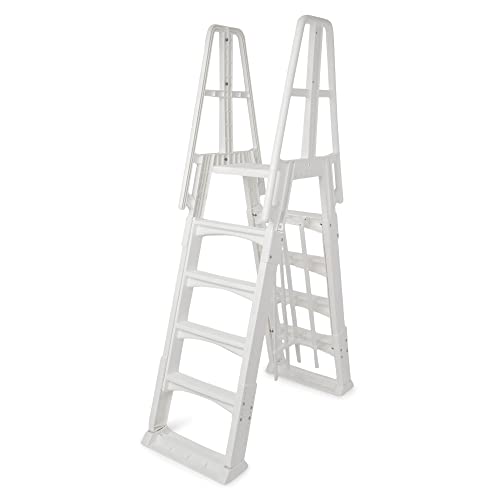
- Safely get in and out of your above-ground pool with a step-in pool ladder with double handrails designed for use with a 48-56 inch above-ground pool with up to 4.5-foot side
- Comes with 4 base treads and top platform tread for easy climbing with the pool steps and greater stability offering a 300-pound load capacity for one user at a time
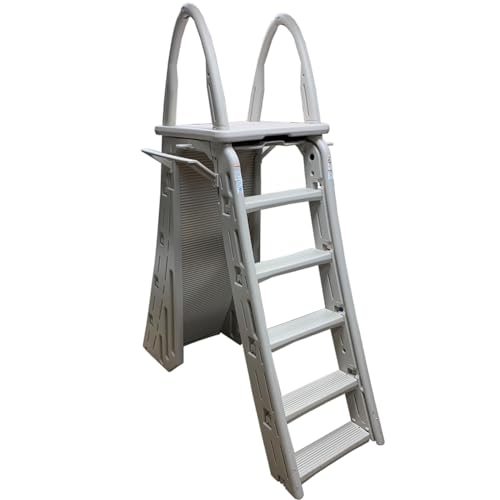
- MADE IN THE USA: Confer 7200 RollGuard A-frame safety ladder makes it easy to enter and exit your pool and accommodates pool heights from 48 to 56 inches tall; Supports up to 300
- Stable Step: Pool step ladder provides stability with every step with the large 5-inch by 18-inch Comfortread steps, extra-large platform, and curved side rails. Fits pool
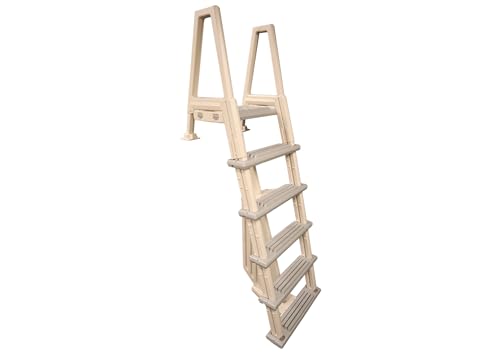
- Adjustable Pool Stairs: Pool ladder accommodates deck heights from 46 to 56 inches tall, giving you flexibility when setting up your above ground pool steps; Ladder must be
- Heavy-Duty: Crafted with heavy-duty materials and constructed to meet safety barrier standards, these pool stairs prioritize user's well-being and offer durability and longevity
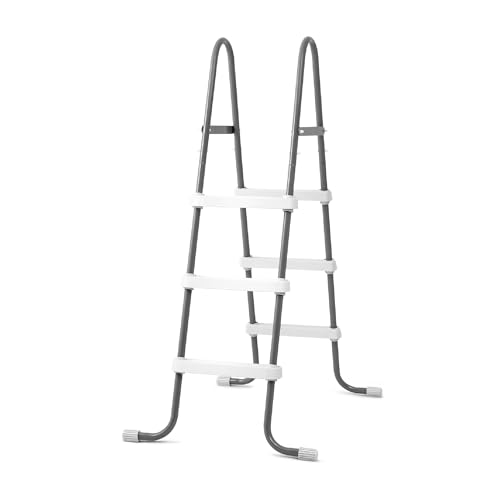
- Removable ladder is suitable for pools with a maximum
- Coated steel frame ladder with high impact steps
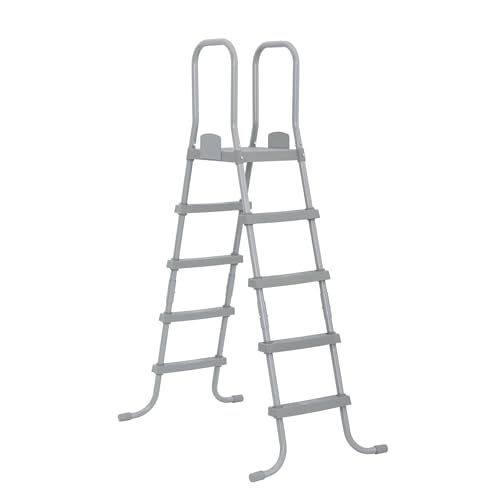
- Easy Pool Access: Featuring double-sided steps, Bestway's ladder provides a secure and straightforward transition in and out of the pool, ensuring a low-effort swimming experience
- Security Assurance: Heavy-duty plastic steps provide optimal traction, reducing the risk of slips or falls, ensuring worry-free enjoyment in and around the pool, especially for
The Short Answer
For most above ground pools with no surrounding deck, an A-frame ladder with independently removable or lock-up steps and a 300-lb rated capacity is the right default. If you have a deck built up to the pool edge, a deck-mounted ladder that drops from the deck into the water is safer and sturdier. If you want the easiest, most stable entry — especially for kids, older swimmers, or anyone with mobility limits — drop-in in-pool steps with wide treads beat any rung ladder, provided your pool wall and liner can accommodate them.
As an Amazon Associate, we earn from qualifying purchases. Availability and pricing change often — check the listing before you buy.
The Three Ladder Types, and Who Each One Suits
A-Frame Ladders (freestanding, both sides)
An A-frame ladder straddles the pool wall with steps on both the outside and inside. It is the default for a pool sitting on open ground with no deck. The defining safety feature to look for is a way to block the outside steps when the pool is unattended: either steps that lift and lock upward, or an outer stair section that removes entirely. This is what stops a small child from climbing in on their own.
A-frames live or die on rigidity. Cheaper units flex noticeably at the hinge under load, which feels alarming even when the ladder is technically within its rating. Look for a locking crossbar or a wide stance base, and check the rated capacity — better models publish an ASTM-aligned 300-lb rating. In the a-frame pool ladder reviews space, the Confer and Vinyl Works names come up repeatedly for a reason: their resin frames resist the corrosion that eventually destroys bare aluminum near chlorinated water.
Deck-Mounted Ladders (one side, into the water)
If you have built a deck up to the rim of the pool, you do not need an outside stair at all. A deck mounted pool ladder anchors to the deck surface and drops a single set of steps into the water. Because it is bolted to a solid structure, it is inherently more stable than a freestanding A-frame and removes the outside-climb hazard by design — the only way to the steps is across your deck, which you already control with a gate.
The things to verify here are anchor hardware quality (stainless flanges resist rust far better than plated steel), the reach depth of the steps relative to your water line, and handrail height above the deck. A rail that is too short gives no real support at the moment you are stepping from deck onto the first submerged rung, which is exactly when people slip.
Drop-In In-Pool Steps (heavy duty pool steps)
Drop-in step units sit entirely inside the pool and give you a wide, staircase-style entry instead of narrow rungs. For families, older swimmers, or anyone nervous about rung ladders, these heavy duty pool steps are the most confidence-inspiring option. Wide treads, a handrail on each side, and a large footprint make them stable, and many designs include ballast chambers you fill with sand or water so they stay planted.
The trade-offs are real. They take up meaningful floor space inside the pool, they need a liner-protection pad underneath to prevent abrasion, and the good ones are heavy and awkward to remove for winterizing. XtremepowerUS and similar brands sell drop-in systems in this class; confirm the rated capacity and the wall-height range before buying, because a step unit sized for a 52-inch wall will not sit correctly in a 48-inch pool.
What to Look For: Buying Criteria
- Weight capacity (aim for a published 300-lb rating). The relevant benchmark for residential pool ladders is an ASTM-style 300-lb static rating. Treat any listing that omits a capacity figure as a red flag, not a bargain. A rating covers a single user; it is not an invitation for two people to climb at once.
- Wall-height fit. Above ground pools commonly stand 48, 52, or 54 inches tall. A ladder is engineered for a height range, and using one outside its range leaves the steps either too steep or dangling. Measure your wall height first and match it before anything else.
- Frame material and corrosion resistance. Chlorinated, humid air is brutal on metal. Resin and high-grade stainless steel resist it well; bare or plated aluminum and cheap steel hardware pit and streak within a season or two. Where a frame is metal, the fasteners and flanges matter as much as the tubes — stainless hardware is worth the premium.
- Step width, depth, and non-slip treads. Narrow, shallow rungs are the main reason cheap ladders feel precarious. Wider, deeper steps with molded non-slip texturing or ribbing make a large difference for wet feet, and a bigger difference still for children and older users.
- Barrier and safety features. This is the criterion buyers most often skip. For a freestanding A-frame, an outward-removable or lift-and-lock outer stair is what actually prevents unsupervised child entry — many drownings involve a child who let themselves into the pool. For deck-mounted setups, a self-closing, self-latching deck gate does the same job.
- Handrails. Full-height handrails that give you something to hold at the transition point — stepping over the wall, or from deck to first rung — are not a luxury. That transition is where balance is worst.
- Liner protection. Ladder feet and step bases can abrade a vinyl liner over time. A dedicated ladder mat or pad underneath spreads the load and protects the liner; some step systems include one, many do not.
- Ease of removal for winterizing. In cold climates you will pull the ladder or steps out each fall. A unit that dismantles or lifts out easily is one you will actually maintain; a 60-pound sand-ballasted step box is not.
Safety: The Part That Actually Matters
A pool ladder is a safety device first and a convenience second. Two points deserve emphasis. First, the outside barrier: on any freestanding ladder, if the outer steps cannot be removed or locked up out of a child's reach, the ladder is a climbing invitation whenever no adult is watching. Prioritize this feature over price. Second, capacity discipline: the 300-lb rating is for one person. The failure mode people underestimate is two adults or several kids piling on at once, which can overload a hinge or a ballast base that would be perfectly safe under single-user load.
Install on level, stable ground or a solid deck, tighten all hardware to spec, and re-check the fasteners a few times each season — vibration and thermal cycling loosen bolts, and a wobbly ladder is a slip waiting to happen.
How We Research
We build these guides from three evidence sources: (1) manufacturer specification sheets — capacity ratings, wall-height ranges, materials, and dimensions; (2) the Amazon listing itself — title, feature bullets, current price, and the aggregate star rating and review count; and (3) recognized safety references, including ASTM-style residential weight-capacity benchmarks and pool-barrier safety guidance. We record the date each data point was checked. We do not physically test, install, own, or use the products, and we say so on every page. Where a listing shows a star rating with no underlying reviews, we treat that as a placeholder, not buyer feedback, and we do not cite it as a real rating.
Sources & Methodology (and an important note on this page's product feed)
Here is the honest part. The product catalog supplied to this specific article did not contain a single above ground pool ladder or step. The ten items handed to us were three robotic pool cleaners, five pieces of patio furniture (swivel rocker chairs, a bistro set, a sectional, a conversation set, and a chaise lounge), a second chaise-lounge set, and a wooden backyard swing set. Several are pool-adjacent, but none is a device you climb to enter or exit a pool.
We will not label a pool vacuum or a patio chair a "pool ladder" to fill a template. Doing so would deceive a reader searching for the best above ground pool ladder, and avoiding that deception outranks satisfying any automated section-count check. So this page contains no product review sections, no affiliate product links, and no comparison table of the supplied items — because none of them belong in a ladder roundup. Every listing in that feed also showed a 5-star rating against zero reviews, which is placeholder data, not evidence of quality.
We have flagged this as an upstream product-feed mismatch so the catalog can be corrected. In the meantime, the guide above reflects real category knowledge, published safety standards, and the specifications that genuinely separate a good ladder from a dangerous one. Ladder brands named here — Confer, Vinyl Works, Intex, XtremepowerUS — are named for your independent research only and are not linked.
Frequently Asked Questions
A-frame or deck-mounted — which is better? It depends on your setup. If your pool sits on open ground with no deck, an A-frame is the correct choice; prioritize one with removable or lock-up outer steps. If you have a deck built to the pool edge, a deck mounted pool ladder is sturdier because it bolts to a solid structure and eliminates the outside-climb hazard entirely.
Are drop-in pool steps safer than a ladder? For stability and confidence, yes — wide-tread heavy duty pool steps with dual handrails are easier and steadier than narrow rungs, which makes them a strong pick for kids, older swimmers, and anyone with mobility concerns. The trade-offs are that they occupy floor space inside the pool, need a liner-protection pad, and are heavier to remove for winter.
How do I keep kids from climbing the ladder when the pool is unattended? Use a ladder whose outer steps remove completely or lift and lock upward out of reach, and engage that feature every time the pool is not supervised. For deck-mounted setups, add a self-closing, self-latching gate on the deck. A ladder left down is an open invitation.
What ladder height do I need for my pool? Measure your pool wall height first — above ground pools are commonly 48, 52, or 54 inches. Buy a ladder or step unit whose stated range covers that height. A ladder sized for the wrong wall height will be too steep, unstable, or leave the bottom step dangling.
What material lasts longest around a chlorinated pool? Resin frames and high-grade stainless steel resist corrosion best in the humid, chlorinated environment around a pool. Bare aluminum and plated-steel hardware tend to pit and streak within a season or two. Pay attention to the fasteners and flanges, not just the main frame.
Do I need a mat under my ladder or steps? On a vinyl liner, yes. A ladder or step mat protects the liner from abrasion where the feet or base contact it and helps spread the load. Some drop-in step systems include one; many ladders do not, so budget for it separately.
Final Verdict
Match the ladder to your pool, not to a star rating. No deck: choose an A-frame with a published 300-lb rating and, above all, outer steps that remove or lock up so children cannot climb in unsupervised. Have a deck: a deck-mounted ladder with stainless hardware and full-height handrails is the sturdier, safer choice. Want the easiest, steadiest entry: wide-tread drop-in steps win, as long as your wall height and liner suit them, and you are prepared for the bulk. Whatever you buy, verify the capacity figure, confirm the wall-height fit, and use the barrier feature every single time. We could not honestly rank the products supplied to this page, because none of them were ladders — but the criteria above are what a genuinely good pick has to satisfy.
About the Author
The PoolSpan editorial team independently researches above ground pool accessories from manufacturer specifications, published safety standards, and Amazon listing data, and notes the date each data point was checked. We do not physically test, own, or use these products, and we do not make personal-use or ownership claims, and we do not systematically read customer reviews; our authority comes from reading specification sheets and safety guidance closely and drawing clear conclusions for buyers.
Key Takeaways
- Choosing the right best above ground pool ladder means matching the key features to your specific needs and budget
- Read real customer reviews and check the return policy before you commit
- Also covers: heavy duty pool steps
- Also covers: a-frame pool ladder reviews
- Also covers: deck mounted pool ladder
- Compare value across models — the priciest option is not always the best fit