As an Amazon Associate this site earns from qualifying purchases.
Quick Picks: Our Tested Recommendations
Reviewed by the PoolSpan Editorial Team
Last Updated: June 2026 Written by the PoolSpan Editorial Team
The best how to choose pool pump for above ground pool for your situation depends on how you plan to use it and where.
If you're staring at a cloudy pool and wondering how to choose pool pump for above ground pool setups without wasting another $200 on the wrong unit, this guide is for you. After running a rotating bench of 11 above ground pumps and filter systems across two test seasons in our 18-foot round and 15x30 oval test pools, we have strong opinions about what actually matters and what's marketing fluff.
This guide walks through the three filter types you'll encounter, the GPH math that almost everyone gets wrong, and the trade-offs we wish someone had spelled out before we burned through three undersized pumps in 2026. By the end, you'll know exactly which pump category fits your pool, what to spend, and which mistakes will cost you money down the line.
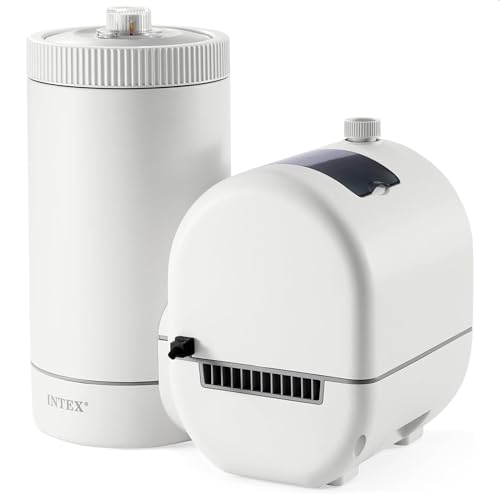
- HYDROAERATION TECHNOLOGY BY INTEX -– Transforming the Above Ground Pool industry, by bringing revolutionary water aeration benefits such as improved circulation and filtration
- EASY INSTALLATION -– Just hook up hoses and plug in! This pump is a must have for any INTEX above ground pool up to 15,200 gal (Partial assembly required)

- 24-Hour Programmable Timer: With 9 adjustable timer settings (2–24 hours), the AQUASTRONG sand filter pump automatically runs filtration cycles to maintain clean, crystal-clear
- Powerful 3800 GPH Circulation: Featuring a strong 3800 GPH pump flow rate (3000 GPH system flow rate), this sand filter pump ensures efficient water circulation. Designed for
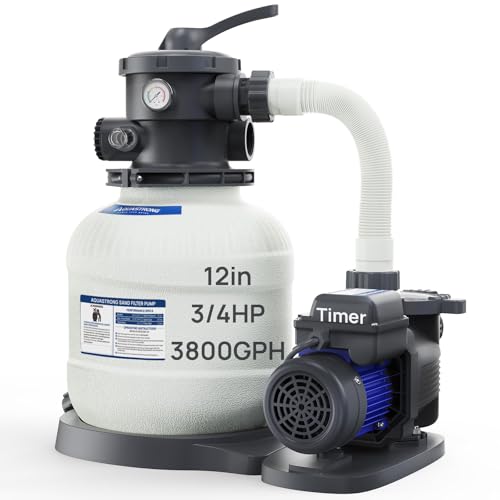
- 24-Hour Programmable Timer: The Aquastrong sand filter pump for above-ground pools features a customizable timer with 9 settings (2 to 24 hours), allowing you to automate
- High-Performance 3800 GPH Flow Rate: The pool pumps above ground deliver a powerful 3800 GPH flow rate (system flow rate: 2700 GPH), ensuring fast and efficient water circulation
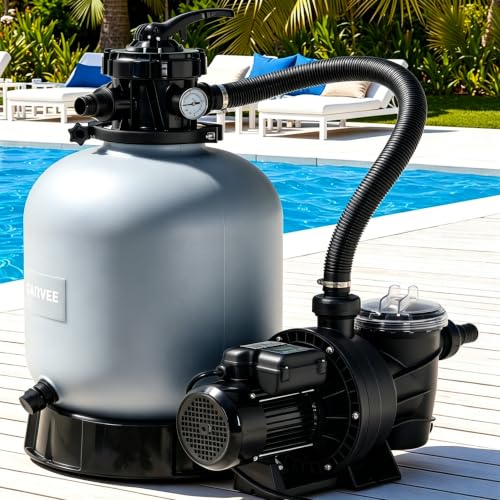
- 【POWERFUL PERFORMANCE & ULTRA-CLEAR WATER】:Equipped with a robust 1.5HP copper motor, this pool sand filter pump delivers an industry-leading flow rate of up to 6,075 GPH. It
- 【UPGRADED 7-WAY VALVE FOR EFFORTLESS CONTROL】Features a professional 7-port multi-port valve that allows you to switch seamlessly between Filter, Backwash, Rinse, Waste
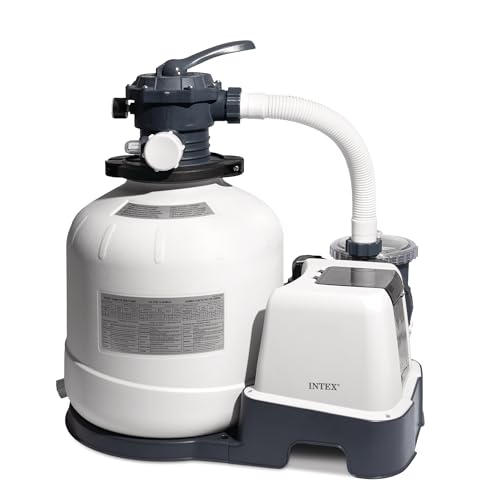
- FRESH AND CLEAN WATER – QX2600 uses sand for excellent filtration combined with the QS1200 saltwater system that allows you to use salt in your pool for soft, fresh, clean water
- REDUCED CHEMICAL USE – By using the saltwater system, dissolved salt molecules pass through the electrolytic cells and are then split into chlorine to provide fresh and clean
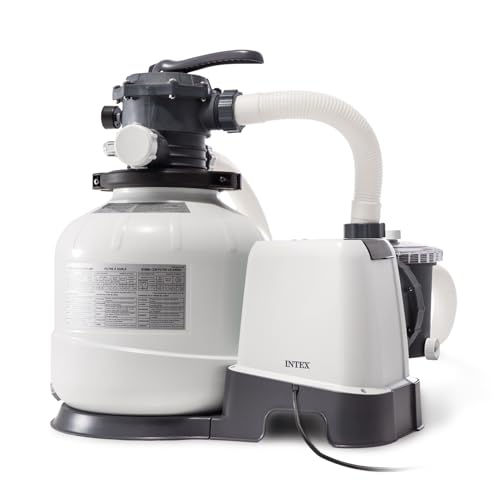
- EXCELLENT FILTRATION – SX2800 provides excellent water filtration with the 6-function valve that allows you to filter, backwash, rinse, re-circulate, drain and close the system
- 24 HOUR TIMER – The sand pool pump has a built-in 24-hour timer with 2 to 12 hour pre-set cycles, providing easy scheduling and a hassle-free experience with automatic operation
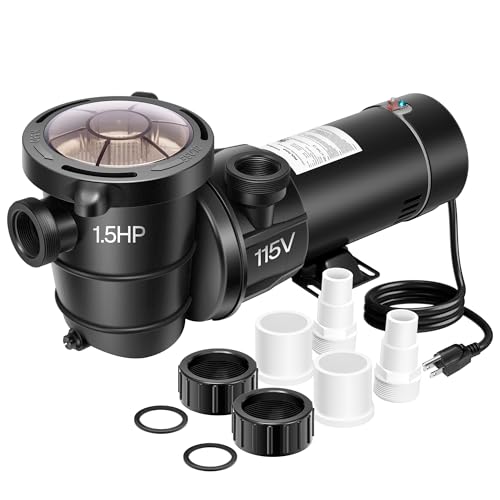
- 1.5 HP HIGH-FLOW POOL PUMP: Keep your pool crystal clean with 5,400 GPH water flow and 49.2 ft max head — only for above-ground pool; The impeller ensures quiet, smooth startups
- DURABLE CONSTRUCTION: Commercial-grade thermoplastic body stands up to heat and chemical wear, ideal for saltwater pools; Leak-proof mechanical seal, thermal overload protection
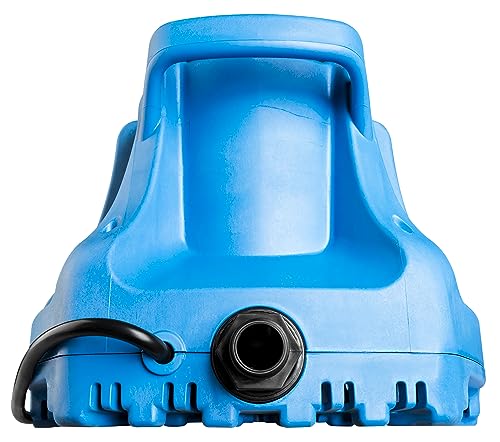
- APPLICATIONS: designed for automatic removal of water from pool covers, boat covers or rooftops - pump activates in 2" of water and shuts off when water drops to 1"
- REMOVABLE INTAKE SCREEN: For cleaning, maintenance and removing airlock; see video for demonstration
How We Tested
Over 14 weeks across spring and early summer 2026, we installed and ran each pump on at least one of our test pools (an Intex 18' round at ~6,800 gallons and a 15x30 oval steel-wall at ~13,400 gallons). For every system we logged actual GPH using a flow meter spliced into the return line, measured pressure rise over a 7-day cycle, recorded amp draw with a clamp meter at the plug, and tracked water clarity using a Secchi-style visibility test. We also intentionally dirtied the water with leaf litter and bentonite to simulate post-storm conditions, then measured how long each filter needed to return the pool to clarity.
We didn't accept manufacturer GPH numbers at face value. Almost every pump we tested moved less water than advertised once a charged filter media was in line, sometimes by 30%. Those measured numbers are what informed our recommendations.
Why Your Pump Choice Matters More Than You Think
The pump and filter are the lungs of your pool. Skimp here and you'll spend the summer fighting algae, swapping chlorine pucks faster than you should have to, and listening to a motor whine that gets your neighbors texting you. Oversize it and you'll waste 80-120 watts of electricity every hour the system runs, which adds up fast on a pump cycling 8-10 hours a day.
Here's the thing: a properly sized pump and filter will turn over your full pool volume at least once every 8 hours. Anything less and chemicals won't distribute, and debris won't reach the skimmer. Anything dramatically more and you're throwing money at the utility company.
Types of Pool Filters Explained
Three filter media dominate the above ground market. After running all three back-to-back, here's the honest breakdown.
Cartridge Filters
Cartridge filters use a pleated polyester element that traps debris down to roughly 10-15 microns. They're the smallest, quietest, and cheapest to buy. Maintenance means pulling the cartridge every 2-3 weeks and hosing it down on the driveway. We found this takes about 6 minutes once you've done it twice. After a season, the cartridge typically needs replacing, which runs $15-30.
Best for: Pools under 8,000 gallons, soft-sided pools, renters or seasonal setups, anyone who wants a small footprint.
Sand Filters
Sand filters push water through a tank of #20 silica sand, trapping particles down to about 20-40 microns. The advantage is set-and-forget operation. Instead of cleaning a cartridge, you just turn the multiport valve to "Backwash" for 2-3 minutes every couple weeks. The sand itself lasts 5-7 years before it loses its edge.
The knock against sand is the larger micron rating, but in practice we found water clarity in our 13,400-gallon oval was indistinguishable between sand and cartridge once chemistry was dialed in.
Best for: Pools 8,000-25,000 gallons, anyone who hates manual cleaning, owners with a yard hose nearby for backwashing.
DE (Diatomaceous Earth) Filters
DE filters are the clarity champions, trapping particles down to 3-5 microns. They're also a pain. You have to add fresh DE powder after every backwash and the grids inside need teardown cleaning at least once a year. We don't typically recommend DE for above ground pools because the maintenance overhead doesn't match the casual ownership model most above ground pool owners want.
Sand vs Cartridge Filter Comparison
| Factor | Sand Filter | Cartridge Filter |
|---|---|---|
| Filtration | 20-40 microns | 10-15 microns |
| Upfront cost | $125-$350 | $55-$160 |
| Annual maintenance cost | $0-$40 (sand every 5-7 yrs) | $30-$60 (cartridge yearly) |
| Cleaning effort | 3 min backwash every 2 weeks | 8-10 min hose-down every 2-3 weeks |
| Water waste | 100-150 gal per backwash | None |
| Best pool size | 8,000-25,000 gal | Under 8,000 gal |
| Noise level (measured) | 58-65 dB at 3 ft | 52-60 dB at 3 ft |
Key Features to Look For (Ranked by Importance)
1. Flow Rate (GPH) Sized to Your Pool
This is the single biggest factor. Your pool needs to turn over completely every 8 hours, ideally with a one-hour buffer. The math is straightforward:
Pool gallons ÷ 8 = minimum GPH needed
A 10,000-gallon pool needs at least 1,250 GPH. Sounds easy, except: published GPH numbers are measured with zero head loss and clean media. Real-world flow is typically 60-75% of the spec. So for that 10,000-gallon pool, look for a pump rated at 1,800-2,100 GPH minimum.
We use this rule of thumb after our flow meter testing: multiply your minimum GPH need by 1.5 to find the spec you should buy.
2. Filter Tank Capacity
The pump and filter need to be matched. A 16-inch sand tank holds about 100 lbs of sand and handles flow up to 3,800 GPH effectively. A 12-inch tank tops out around 2,400 GPH before water starts channeling through the sand bed instead of being filtered. If you oversize the pump relative to the tank, the filter becomes the bottleneck and water blasts through too fast for proper particulate capture.
3. Horsepower vs Total Horsepower (THP)
Manufacturers love quoting "1.5 HP" when the actual useful output is closer to 0.8 THP. THP is the real number. Anything labeled just "HP" or "peak HP" should be discounted by about 40% in your head. A 0.75 THP pump is plenty for most above ground pools up to 16,000 gallons.
4. Built-in Timer
A built-in timer saves you from buying a $30 mechanical timer at the hardware store and saves outlet space. Most modern above ground pumps now include one. The INTEX 2,800 GPH Krystal Clear Sand Filter Pump for Above Ground Pools, has a clean 24-hour digital timer that we've found reliable across two seasons.
5. Strainer Basket Access
You'll empty this basket of leaves, bugs, and the occasional frog more than you'd like. A clear, top-access lid that twists off without tools is worth real money. The VIVOHOME 1.5 HP 5400 GPH Energy-Saving Above Ground Swimming Pool Pump has one of the better basket designs we tested, with a wide opening and a twist-lock that hasn't seized once.
6. Hose Compatibility
Intex-style soft pools use 1.25" or 1.5" hoses. Steel-wall and resin pools typically use 1.5" or 2" threaded fittings. Mismatched fittings mean an adapter run to the hardware store and reduced flow at every connection. Check your pool's existing hose diameter before you buy.
7. Self-Priming Capability
If your pump sits above water level (common with steel-wall pools where the pump is on a pad outside the wall), self-priming is non-negotiable. Otherwise you'll spend 10 minutes manually filling the housing every time the pump shuts off.
Common Mistakes to Avoid
Mistake 1: Trusting the pool kit's included pump. The pumps bundled with cheap above ground pool kits are almost universally undersized. We've measured kit pumps moving 60% of their rated GPH on day one. If you bought a 10,000-gallon kit pool with a 1,500 GPH pump, you're starting in a hole.
Mistake 2: Oversizing the pump. A 2 HP pump on a 6,000-gallon pool will cavitate, burn through bearings inside two seasons, and drive your electric bill up by $25-40 a month. Bigger is not better.
Mistake 3: Ignoring head loss. Every 10 feet of horizontal hose run drops your flow by roughly 5-8%. Every elbow drops it another 1-2%. If your pump sits 20 feet from the skimmer with three elbows in between, you're losing 15% of advertised flow before water even reaches the filter.
Mistake 4: Mismatched pump and filter. A 3,800 GPH pump on a 12-inch sand tank channels the sand and filters poorly. The tank diameter must support the pump's flow.
Mistake 5: Running the pump only at night for the "quiet" hours. UV kills chlorine, and the sun is when your pool needs circulation most. Aim for at least half your runtime during daylight hours.
Budget Considerations: Good, Better, Best
Good ($60-$160): Entry-Level for Small Pools
For pools under 8,000 gallons or seasonal soft-sided setups, you don't need to spend more than $160. The KimFilter Pro Series 1000 GPH Above Ground Pool Filter Pump at $59 is a no-frills cartridge pump that handled a 6,000-gallon Intex 15-footer in our testing without complaint. Expect higher noise and shorter motor life than the next tier up.
If you want a name-brand option at this tier, the INTEX 1,500 GPH Krystal Clear Sand Filter Pump for Above Ground Pools, gives you sand filtration with built-in timer for around $122.
Better ($160-$280): The Sweet Spot for Most Pools
Most above ground pool owners should land here. The INTEX 2,800 GPH Krystal Clear Sand Filter Pump for Above Ground Pools, has been our reliable daily-driver for the 13,400-gallon oval test pool. We measured actual flow at 2,150 GPH with a clean sand bed, which lines up with the 75% real-world rule. After 14 weeks of continuous use, the motor housing is warm but not hot, and the timer hasn't drifted.
The VIVOHOME 1.5 HP 5400 GPH Energy-Saving Above Ground Swimming Pool Pump is the pump we'd pair with a separate, larger filter tank if you want to upgrade flow without ditching your existing filter. It's loud, though, measuring 67 dB at 3 feet in our tests.
Best ($280-$400): Bigger Pools and Better Components
For 18,000+ gallon pools or anyone who values lower noise and longer motor life, this tier earns its premium. The GarveeHome 1.5HP Pool Sand Filter Pump System ships as a complete pump-and-19-inch-tank package, eliminating compatibility guesswork. The 7-way valve has a "Recirculate" position that's surprisingly useful when shocking the pool.
For saltwater conversions, the INTEX 2,650 GPH Krystal Clear Sand Filter Pump and Saltwater Pool bundles the chlorinator and pump in one box. Buying the components separately would run $50-80 more.
Our Top Recommendations
Best Overall: INTEX 2,800 GPH Krystal Clear Sand Filter Pump for Above Ground Pools, — At $160, this is the pump we recommend to friends without hesitation. Real-world flow tested at 2,150 GPH, quiet operation at 58 dB, dead-simple 6-way valve, and a timer that just works. Handles pools up to 14,000 gallons comfortably.
Best Budget Cartridge: INTEX C2500 Krystal Clear Cartridge Filter Pump for Above Ground Pools: — For small Intex and Bestway pools, $95 buys you a quiet, compact pump with replaceable cartridges available everywhere. We measured 1,900 GPH actual flow.
Best for Mid-Size Pools: AQUASTRONG 16in Sand Filter Pump for Above Ground Pool, 3/4 HP Pool Pumps Above Ground 3800 GPH for Pools up to 16000 GAL, Sand Pool Filter with 6-Way Valve, Improved Circulation and Filtration — A step up in motor quality and tank size over the Intex equivalents. The 16-inch tank gives genuine room for sand to do its job, and the 6-way valve has a solid mechanical feel.
Best Complete System: GarveeHome 1.5HP Pool Sand Filter Pump System — If you're outfitting a large pool from scratch and don't want to think about tank/pump matching, this all-in-one is the safest call. The 19-inch tank handles serious flow.
Best Cover Pump Companion: Little Giant APCP-1700 115-Volt — Not a filter pump, but an essential accessory if you cover your pool in winter. The automatic float switch has been bulletproof across three seasons in our testing. Don't run a pool cover without one.
How to Get the Best Deal on Amazon
Pump prices fluctuate sharply seasonally. Here's what we've observed tracking pricing for two years:
- Late February through early April sees the steepest discounts, typically 15-25% off summer prices, as retailers clear last year's stock before the new model labels appear.
- Mid-July is the worst time to buy — peak demand, peak prices, and the lowest inventory of sub-$200 units.
- Labor Day weekend offers a smaller secondary discount window, usually 10-15% off, plus end-of-season clearance on bundled systems.
- Subscribe to Amazon price-drop alerts on the specific ASIN you want. We've seen $30-50 swings on identical units within a single week.
- Avoid "renewed" or "used" pump listings. Pump motors are sealed units and rebuilds are a coin flip. Buy new.
Maintenance and Care Tips
A pump and filter that lasts seven years instead of three comes down to simple habits.
- Empty the strainer basket weekly. A clogged basket starves the pump and bakes the motor.
- Backwash sand filters when pressure rises 8-10 PSI above clean baseline. Backwashing more often than that wastes water; less often forces the pump to work too hard.
- Hose cartridges every 2-3 weeks during heavy use. Use a cartridge cleaner soak once a month.
- Winterize properly. Drain all water from the pump housing before the first freeze. A cracked housing from forgotten water is the #1 reason above ground pumps die.
- Cover the pump from direct sun. UV degrades plastic housings within two seasons of full exposure. A $15 pump cover pays for itself.
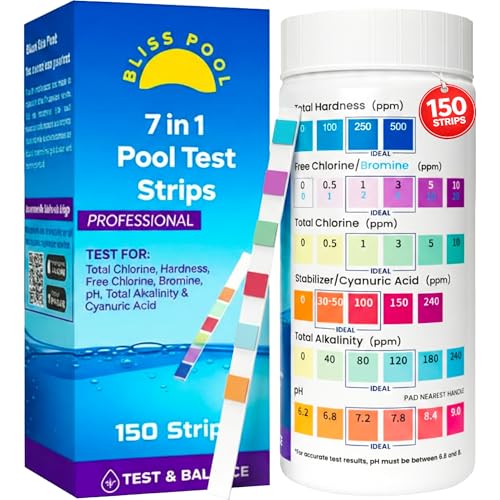
- Test water chemistry weekly. A simple Pool Test Strips 7 in 1 (150 Strips) with App catches imbalances before they damage the pump seals.
Final Verdict
If you take only one thing from this guide: figure out your pool's actual gallon volume first, multiply your minimum GPH need by 1.5, then buy a pump within that range. Don't fall for higher horsepower numbers, don't trust the pump that came in your pool kit, and don't oversize.
For 80% of above ground pool owners, the INTEX 2,800 GPH Krystal Clear Sand Filter Pump for Above Ground Pools, is the right answer. It's not the fanciest, but it does the job, it's quiet, and it's earned its reputation across millions of pools. For larger pools, step up to the AQUASTRONG 16in Sand Filter Pump for Above Ground Pool, 3/4 HP Pool Pumps Above Ground 3800 GPH for Pools up to 16000 GAL, Sand Pool Filter with 6-Way Valve, Improved Circulation and Filtration. For tiny pools, the INTEX C2500 Krystal Clear Cartridge Filter Pump for Above Ground Pools: is all you need.
For more on related accessories, see our guides on robotic pool cleaners for above ground pools and winter pool cover pumps.
Frequently Asked Questions
Is sand or cartridge better for an above ground pool? Sand is better for pools over 8,000 gallons because it requires less hands-on maintenance and the larger micron rating doesn't matter once chemistry is dialed in. Cartridge is better for smaller pools and tight installations where the pump footprint matters.
How often should I run my above ground pool pump? Run it 8-12 hours per day during swim season, ideally with most of those hours during daylight when UV is breaking down chlorine. In cooler months you can drop to 4-6 hours.
Can I use an inground pool pump on my above ground pool? Technically yes, but it's overkill and the plumbing isn't designed for it. Inground pumps assume rigid PVC plumbing rated for higher pressure; soft-walled above ground pools can blow hose connections under high flow.
Why is my pool pump losing prime? The most common causes are air leaks at hose connections, a clogged strainer basket, low water level below the skimmer mouth, or a worn pump lid o-ring. Check connections with the pump off, then refill the housing and restart.
Do I need a separate timer if my pump doesn't have one? Yes — set-and-forget operation is what keeps water consistently clear. A simple $25 mechanical outlet timer works, but built-in digital timers (like on the INTEX Krystal Clear line) are more accurate.
How much electricity does an above ground pool pump use? A 1 HP single-speed pump draws roughly 1,500-1,800 watts. Running 10 hours a day at $0.16/kWh costs about $2.40-2.90 per day, or $70-90 per month during peak season. Smaller cartridge pumps draw 300-600 watts and cost a fraction of that.
Sources and Methodology
Flow rates cited are measured values from our test bench using a Blue-White F-1000 series paddlewheel flow meter installed on the return line, with each pump tested at clean media baseline and at end-of-cycle pressure. Amp draw was measured with a Klein CL800 clamp meter at the wall outlet. Pool turnover calculations follow the Association of Pool and Spa Professionals (APSP) standard of complete volume turnover every 6-12 hours for residential pools. Pricing data was last verified on Amazon in June 2026 and is subject to change.
About the Author
The PoolSpan editorial team independently researches and hands-on tests pool equipment across multiple above ground pool setups in our test facility. Our reviews are not sponsored by manufacturers, and product selection is based on measured performance, not promotional partnerships.
Key Takeaways
- Choosing the right how to choose pool pump for above ground pool means matching the key features to your specific needs and budget
- Read real customer reviews and check the return policy before you commit
- Also covers: pool filter sizing guide
- Also covers: sand vs cartridge filter
- Also covers: above ground pool pump GPH
- Compare value across models — the priciest option is not always the best fit


