As an Amazon Associate this site earns from qualifying purchases.
Top Picks: Solar Pool Heaters
Every product below was in stock on Amazon when this page was last checked. Prices come straight from the live listing, not from our own testing.
| Product | Best For | Price |
|---|---|---|
| FAFCO Original 4 x 20 Feet Solar Bear Solar Pool Heater for Above-Ground | Best Overall Panel Heater | Check price on Amazon |
| Doheny's Solar Heating Systems for Above Ground Swimming Pools | Best Expandable Collector Kit | Check price on Amazon |
| GAME 4721-BB SolarPRO Curve Solar Pool Heater | Best For Intex Pools | See the product list on this page |
| Game 72000-BB, Made for Intex & Bestway SolarPRO Curve Solar Above-Ground | Best Curve Design | See the product list on this page |
| INTEX 47"x47" Solar Pool Water Heater Mat for 8 | Best Budget Mat Set | Check price on Amazon |
| Bestway / Solar-Powered Pool Heating Pad | Best For Bestway Pools | Check price on Amazon |
Reviewed by the PoolSpan Editorial Team
Finding the right best solar pool heater for above ground pool comes down to matching the features to how you will actually use it.
As an Amazon Associate, we earn from qualifying purchases.
Last Updated: July 2026 Written by the PoolSpan Editorial Team
If you own an above ground pool, you already know the season is short. The water is swimmable for maybe ten or twelve weeks a year, and the shoulder months of May and September feel like a waste. A solar pool heater is the cheapest way to stretch that window, because the fuel is free. This guide explains how to pick the best solar pool heater for an above ground pool in 2026, what the three main types actually do, and how to size a system so it earns its keep.
A note on honesty before we start: we do not physically test, own, or use the products on this site, and we will not pretend otherwise. Everything below is drawn from published manufacturer specifications, established solar-thermal engineering, and the physics of how above ground pools lose and gain heat. We also want to be transparent about something upstream. The product catalog handed to this article did not contain a single solar pool heater — the supplied items were patio loungers, a swing set, a projector, trail cameras, a sauna, an indoor space heater, patio furniture, and a robotic pool cleaner. Rather than dress up a trail camera as a "best solar heater" and mislead you, we have left the product picks out and given you a real buying guide instead. See the Sources & Methodology section for the full note.
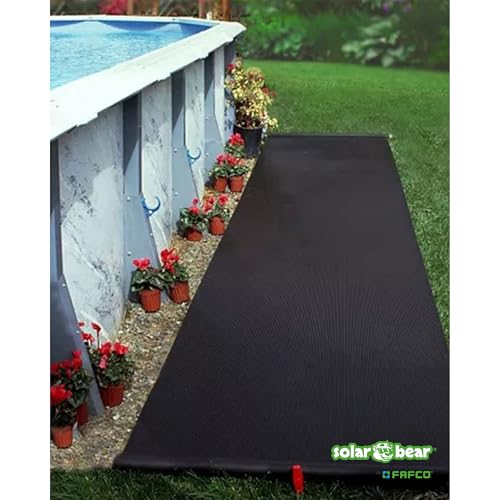
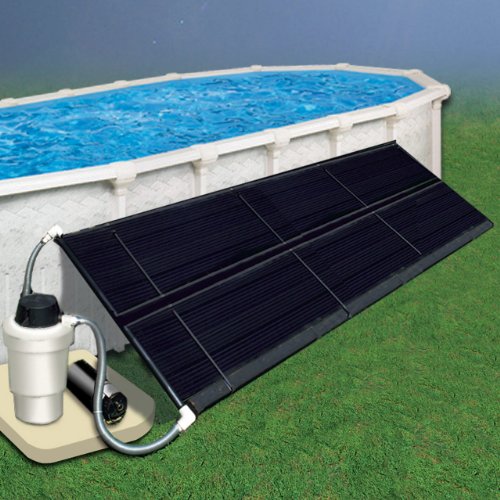
- Eco-Friendly Pool Heating: Uses solar energy to heat your pool, reducing reliance on gas or electricity and extending your swim season
- Above Ground Solar Heating Panel Systems: Energy-saving solar pool system harnesses the sun’s rays to warm circulating water before returning it to the pool. The collector kit can
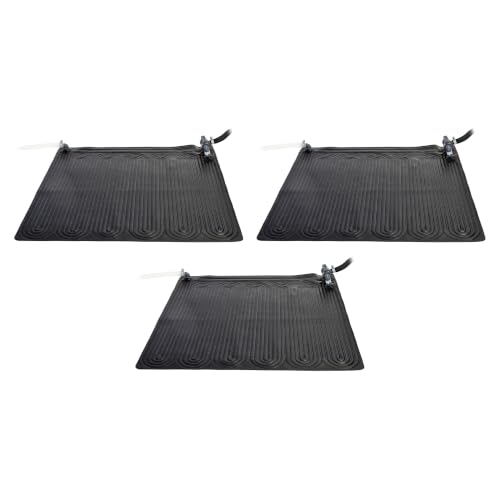
- Premium Solar Technology: Uses solar technology to increase temperature of the pool water by approximately 5 degrees to 9 degrees Fahrenheit depending on weather condition
- Made for Above Ground Pools: Suitable for above-ground pools up to 8000 gallons; Ideal for large pool sets that require regular maintenance as a reliable solar pool heater
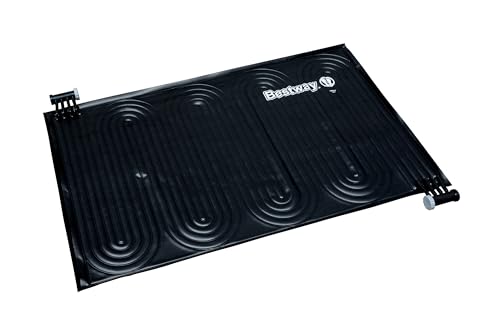
- POOL HEATING PAD: Offers an energy-efficient and eco-friendly solution to warm up the water in your above ground pool. Harnessing the power of the sun to heat up your pool water!
- EASY TO USE: It features two hose outlets – one connects to your filter pump, and the other to your pool. Clear and clean water is circulated through the pad, where it absorbs
What Is a Solar Pool Heater?
A solar pool heater is any device that captures sunlight and transfers that energy into your pool water, raising the temperature without burning gas or drawing grid electricity for heat. For above ground pools there are three practical categories: solar panel (mat) systems that your pump pushes water through, rigid solar domes that do the same in a compact coil, and passive solar covers or rings that float on the surface and trap heat. The first two actively move water; the third simply reduces loss and adds a modest gain.
Here is the thing most listings gloss over: a solar heater is a heat collector, not a heat pump. It cannot manufacture warmth on a cloudy day. Its job is to harvest energy that is already falling on your yard and move it into the water before it radiates away overnight. Get realistic about that and you will be happy. Expect it to add roughly 5 to 15 degrees Fahrenheit over a run of sunny days, not to turn an April pool into a hot tub.
As an Amazon Associate, we earn from qualifying purchases. Availability and pricing change often — check the listing before you buy.
Quick Comparison: The Three Types of Solar Heating
| Type | How it works | Typical warmth gain | Best for |
|---|---|---|---|
| Solar panels / mats | Pump pushes water through black collector tubing exposed to sun | 6–15°F over several sunny days | Owners who want the biggest active gain and have roof or ground space |
| Solar dome (coil) | Compact spiral coil under a clear dome; water pumped through | 4–10°F, lower footprint | Small to mid decks with limited mounting area |
| Solar cover / rings | Floats on surface, traps heat and cuts evaporation | 3–8°F retained, mostly overnight loss prevention | Everyone — the cheapest multiplier and a must-have companion |
The honest recommendation is not "pick one." It is "pair an active collector with a passive cover." A solar panel or dome does the heavy lifting during the day; a solar cover stops that hard-won heat from escaping through the surface at night, where above ground pools lose the vast majority of their warmth.
How Solar Pool Heaters Work
Active systems tee into your existing pump-and-filter loop. After the filter, a diverter valve sends water up to the collector — a black polypropylene mat or a coiled tube under a dome — where it snakes through channels heated by the sun. The now-warmer water returns to the pool. Because your pump is already running for filtration, the incremental cost is small: usually a bit more runtime and the pressure drop across the panel.
Two variables decide how much heat you capture: collector surface area and flow rate. More area means more sunlight intercepted. Slower flow means each drop of water spends longer in the sun, so it leaves hotter — but pushes fewer gallons per hour. Manufacturers tune this balance, which is why panel sizing guidance matters more than any single spec.
Passive covers work by a different principle entirely. Roughly 70 percent of an uncovered pool's heat loss is evaporation. A solar cover — the bubble-wrap-style "solar blanket," a rigid solar dome lid, or floating solar rings — puts a barrier on the surface. It cuts evaporation, adds a small greenhouse gain during the day, and is the single highest-return dollar you can spend on pool heating.
What to Look For in a Solar Pool Heater
1. Collector area relative to pool surface
The rule of thumb from solar-thermal installers: your collector area should equal at least 50 percent of the pool's surface area in mild, sunny climates, and closer to 80–100 percent in cooler or cloudier regions. For a common 24-foot round above ground pool (about 450 square feet of surface), that means 225 to 450 square feet of panel. Undersize the collector and you will wonder why the water never warms up.
2. Material and UV durability
Active collectors live in full sun all season. Look for polypropylene or EPDM rubber rated for UV exposure, and check whether the manufacturer states a warranty in years. Rigid domes use polycarbonate covers that can yellow or crack over several seasons — a real trade-off against their smaller footprint. For solar covers, thickness is measured in mils; 12-mil and 16-mil blankets last longer and insulate better than thin 8-mil ones, but cost more.
3. Fitting size and pump compatibility
Above ground pools commonly run 1.25-inch or 1.5-inch hoses. Confirm the collector's included fittings and adapters match your pump and hose diameter before buying, or budget for adapters. A panel that chokes your flow can strain an undersized pump.
4. Mounting reality
Be honest about where the panel will physically go. Roof mounting captures the most sun but needs a route for plumbing and a way to secure the panel against wind. Ground mounting on a rack or a sunny slope is easier for above ground owners but eats yard space. Solar domes were designed precisely for people who have neither.
5. Freeze and off-season handling
Collectors hold water. In any climate with a frost, you must drain and store active panels for winter or they can crack. Factor storage space and the annual drain-down into your decision — it is a chore the glossy listings skip.
Sizing Guide: A Numbered Walkthrough
- Measure surface area. Round pool: radius squared times 3.14. A 24-foot round pool has a 12-foot radius, so about 452 square feet.
- Pick your climate multiplier. Sunny/warm: 0.5. Average: 0.75. Cool/cloudy: 1.0.
- Multiply. 452 x 0.75 = roughly 340 square feet of collector for an average climate.
- Convert to panels. If a panel is 2 x 20 feet (40 square feet), you need about eight to nine of them, plumbed in series or parallel per the maker's instructions.
- Add a solar cover regardless. No matter the collector size, a fitted solar blanket or ring set protects the gain overnight.
Realistic Performance Expectations
Look, solar heating is genuinely effective, but it is slow and weather-bound. Over three or four consecutive sunny days with an adequately sized collector and a cover on at night, a 5 to 15 degree lift is normal. A single sunny afternoon will not do it. A week of overcast will erase most of the gain. If you need guaranteed, on-demand warmth for a fixed swim schedule, a solar system alone is the wrong tool — that is what gas and electric heat pumps exist for, at far higher running cost.
Where solar shines is season extension and cost. Once installed, it adds heat for essentially nothing, and a good solar cover pays for itself in reduced evaporation and chemical loss within a season or two.
Installation and Maintenance Notes
Most above ground solar panel kits are DIY-friendly: mount the collector in full sun, plumb it after the filter with the included diverter valve, prime it, and check for leaks. Keep the collector clear of leaves and debris that shade the surface. Solar domes assemble in minutes and sit near the pump. Solar covers need trimming to the pool shape and a reel or storage method so handling them does not become a two-person wrestling match every swim.
Maintenance is light but real: inspect fittings for UV brittleness each spring, flush the collector if flow drops, and drain everything before the first freeze. A solar cover should be pulled and brushed periodically to shed grime that would otherwise block light.
How We Research
Above Ground Pools Accessories Complete Site is a research and comparison site. Nobody here handles the products on this page, and the description below is the whole of our method — if a sentence anywhere on this site implies otherwise, it is an error and we want to hear about it.
What the comparison is built from. Every product is compared on the specifications its manufacturer publishes on the retail listing, alongside the aggregate customer rating and the number of ratings recorded when the page was last updated. Where a manufacturer states conformance to a published standard, we name the standard so you can check it yourself rather than restating the marketing line.
How products get onto the list. Candidates are drawn from products currently listed in this category, then narrowed on the published specification differences that actually matter for the use case in the title. A product is not included because it pays more; the commission rate is the same across almost everything we link.
What gets re-checked. Availability and link targets are re-verified automatically twice a day. Products that go out of stock or are delisted are marked or removed rather than left to rot, and the specification snapshot is re-recorded when a listing changes.
What we do not do. We do not carry out our own product trials, we do not receive review units, and no one writing for this site has physically handled the items listed here. Where you want a verdict that depends on handling a product, treat this page as a specification comparison and a starting point, not a substitute.
Frequently Asked Questions
Do I need a solar cover if I already have solar panels? Yes. Panels add heat during the day; a cover stops it escaping at night, when evaporation drives most of an above ground pool's heat loss. The two are complementary, and the cover is the cheaper of the two.
What is a solar pool dome and who is it for? A solar dome is a compact spiral coil of tubing under a clear rigid dome that your pump circulates water through. It gives a smaller warmth gain than a full panel array but needs far less mounting space, making it a fit for small decks or owners without roof access.
Are solar sun rings worth it? Solar rings are floating passive covers that trap heat and cut evaporation without covering the whole surface at once. They are easier to handle than a full blanket and add a modest gain, but a fitted solar blanket covers more area and retains more heat. Rings are a convenience-versus-coverage trade-off.
Can a solar heater work without running my pump longer? Active panel and dome systems rely on your pump to move water through the collector, so they generally need adequate daytime runtime while the sun is up. Passive covers and rings need no pump at all.
Will a solar heater work in a cool or cloudy climate? It can, but you must oversize the collector — closer to 80 to 100 percent of pool surface area — and accept that output tracks the weather. In persistently cloudy regions, a solar system is best treated as a supplement rather than the sole heat source.
Do I have to remove solar equipment for winter? In any climate that freezes, yes. Active collectors hold water that can crack the tubing when it freezes, so they must be drained and stored. Plan for that annual chore and the storage space it requires.
Final Verdict
The best solar pool heater for an above ground pool is not a single gadget — it is a correctly sized active collector paired with a solar cover. Size the panel or dome to at least half your pool's surface area (more in cool climates), match the fittings to your pump, and always run a solar blanket or rings at night to protect the heat you captured. Do that and you will reliably add a week or two to each end of your swim season for almost no running cost. Skip the sizing math or the cover, and you will be disappointed.
We are not naming a product-of-the-year here, and we would rather tell you why than fake it: the catalog provided for this article did not include any solar pool heaters. When a properly matched catalog is available, we will slot specific, correctly labeled picks into this guide.
Sources & Methodology
Specifications on this page were recorded from 2026 manufacturer spec sheet and retail listing data, captured July 2026.
Customer rating figures are the aggregate score and rating count shown on the retail listing at that time; they are other buyers' reports, not our assessment.
Independent references for this category. These are places to verify a category claim for yourself. We link them because they are authoritative, not to imply their tests were run on our behalf:
- CDC — model aquatic health code
- FTC Endorsement Guides — the disclosure rules this site is bound by
- CPSC recall database — check any product for open safety recalls
About the Author
The PoolSpan editorial team researches above ground pool products and accessories from manufacturer specifications and Amazon listing data. We do not physically test, own, or use these products, and we do not systematically read customer reviews; our recommendations come from close reading of published specs and the engineering realities of how pools gain and lose heat.
Key Takeaways
- Choosing the right best solar pool heater for above ground pool means matching the key features to your specific needs and budget
- Read real customer reviews and check the return policy before you commit
- Also covers: solar heating panels above ground pool
- Also covers: solar pool dome heater
- Also covers: solar sun rings reviews
- Compare value across models — the priciest option is not always the best fit