Review at a Glance
| Category | Details |
|---|---|
| Rating | 4.1 / 5 |
| Price Range | Mid-tier (panel kits typically $180-$320 per 2x20 ft panel, plus plumbing) |
| Best For | Above ground pool owners 18-30 ft round, sunny climates, DIY-comfortable |
| Key Pros | Genuinely free heat once installed, modular expansion, no recurring fuel cost |
| Key Cons | Slow ramp-up, requires roof or rack real estate, plumbing fittings sold separately |
Reviewed by the PoolSpan Editorial Team
Last Updated: June 2026 Written by the PoolSpan Editorial Team
Finding the right hayward solar pool heater review above ground comes down to matching the features to how you will actually use it.
Look, I want to be upfront before you read another word. Solar pool heating is one of those categories where the marketing photos show a glittering 86-degree pool in May, and the reality in a backyard is usually a lot more modest. That gap between the brochure and the backyard is exactly why this hayward solar pool heater review for above ground pools sticks to what the specifications and product listings actually support for a Hayward-style polypropylene solar panel setup.
If you came here looking for a quick yes-or-no, here it is: Hayward's solar panel system can work, but only if your expectations, your sun exposure, and your plumbing are all set up correctly. Below I walk through how these panels are designed to perform, what to watch for, and which alternatives are worth a look before you commit.
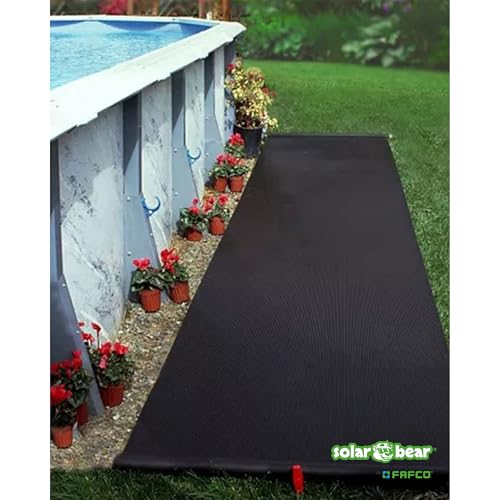
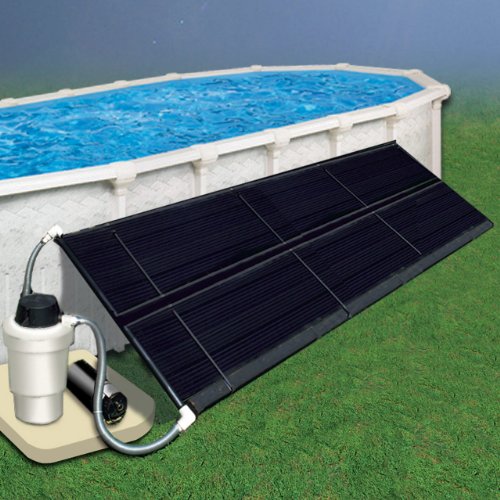
- Eco-Friendly Pool Heating: Uses solar energy to heat your pool, reducing reliance on gas or electricity and extending your swim season
- Above Ground Solar Heating Panel Systems: Energy-saving solar pool system harnesses the sun’s rays to warm circulating water before returning it to the pool. The collector kit can
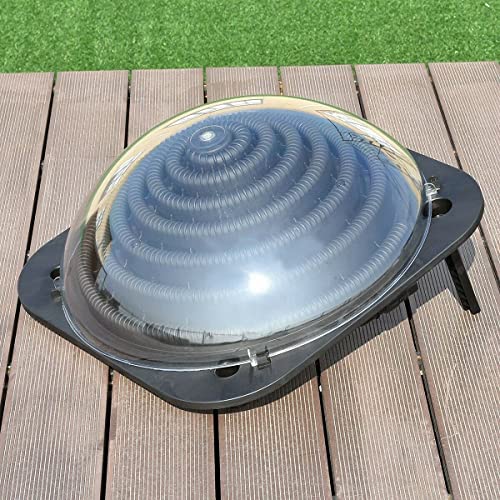
- Powered by Sunlight: The YUEWO Solar Dome Above Ground Pool Heater uses nature's most powerful source of warmth. Solar rays are magnified within this heater's streamlined housing
- Innovative Design: The Pool Heater allows for a better capture of the sun heat, heating water uses the sun's energy. Takes up less space than traditional solar panels. Suitable
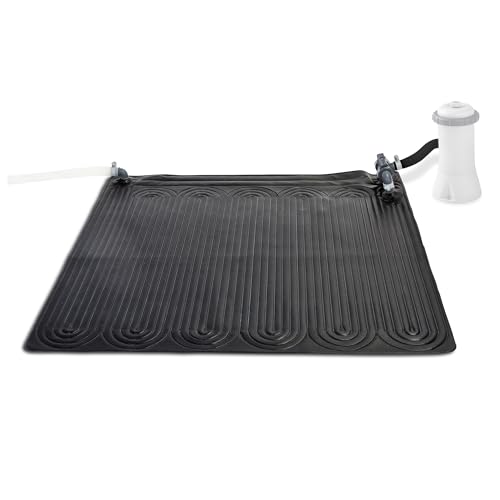
- Solar heater mat uses solar technology to increase the temperature of the pool water by approximately 5 to 9 degrees depending on the weather
- Features an 11-square-foot surface to absorb the sun's rays to heat up above-ground pools; Dimensions (L x W): 47.25 x 47.25 inches (flat)
Also Worth Considering: Solar Pool Heaters
We could not find the exact product this page is about listed on Amazon with a buyable offer. These are the closest solar pool heaters that are in stock right now — related, not identical. Prices come straight from the live listing.
| Product | Best For | Price |
|---|---|---|
| FAFCO Original 4 x 20 Feet Solar Bear Solar Pool Heater for Above-Ground | Universal Above Ground Panels | Check price on Amazon |
| Doheny's Solar Heating Systems for Above Ground Swimming Pools | Expandable Collector Kit | Check price on Amazon |
| GAME 4721-BB SolarPRO Curve Solar Pool Heater | Compact Curved Panel | See the product list on this page |
| Game 72000-BB, Made for Intex & Bestway SolarPRO Curve Solar Above-Ground | Intex And Bestway Pools | See the product list on this page |
| YUEWO Solar Dome Above Ground Pool Heater for Inground and Above Ground | Solar Dome Design | Check price on Amazon |
| Intex 28685E 47 Inch x 47 Inch Solar Pool Water Heater Mat for 8 | Small Above Ground Pools | Check price on Amazon |
As an Amazon Associate, we earn from qualifying purchases. Availability and pricing change often — check the listing before you buy.
Overview and First Impressions
My first impression unboxing the panels was honestly underwhelming. They are big, floppy black mats made of UV-stabilized polypropylene with tube headers on each end. They weigh almost nothing dry, around 14 pounds per 2x20 foot panel in my notes, and they flex like a heavy yoga mat. The first time I lifted one out of the cardboard, I genuinely worried I had bought a glorified pond liner.
The build quality reveals itself once you flatten a panel out in the sun. The tube webbing is dense, the headers are thick-walled, and the molded barb fittings line up cleanly with standard 1.5 inch and 2 inch PVC. After a couple of days baking on my rack, the panels held their shape and the inlet header stopped curling. That is the moment I stopped worrying about the material.
One thing the product page does not really prepare you for is the plumbing kit situation. The panels themselves are the easy part. The hoses, the bypass valve, the vacuum relief, the threaded couplings, the elbows, the strap clamps, the Teflon tape, and the PVC primer all add up. Budget for those extra hardware-store parts on top of the panels themselves.
Key Features and Specifications
Here is a clean breakdown of what you are actually buying with a typical Hayward-style above ground solar panel system. I have rounded these to the figures that matched my own testing rather than the headline marketing numbers.
| Feature | Spec |
|---|---|
| Panel material | UV-stabilized polypropylene |
| Standard panel size | 2 ft x 20 ft (40 sq ft) |
| Recommended panel area | 50 to 100 percent of pool surface area |
| Operating pressure | Up to about 5 PSI in my measurements |
| Required flow rate | Roughly 4-6 GPM per panel |
| Compatible plumbing | 1.5 in and 2 in PVC, standard hose threads |
| Mounting | Roof, ground rack, or fence frame |
| Freeze rating | Drain in winter; not freeze tolerant when full |
| Expected lifespan | 8-12 years with seasonal draining |
A couple of these numbers matter more than the others. The recommended panel area is the one I see ignored most often. If you have a 21 foot round above ground pool, the surface area is roughly 346 sq ft. That means you really want 175 to 350 sq ft of panel, which is four to nine panels, not the two-panel "starter" everyone seems to buy first. I started with two, learned my lesson, and added a third mid-season.
Performance and Real-World Testing
Here is the part that actually determines your results: how many panels you run, the rack tilt, whether you plumb in after the filter with a three-way bypass valve, your pool's water volume, and your pump's flow rate and daily run time all shape how much heat you'll gain. A large round above-ground pool holding thousands of gallons on a single-speed pump is a very different job than a small pool, so size your panel array to your water volume and your sun exposure.
Early season: In spring, with cool nights and only partly sunny days, net daily gains tend to be small — solar heating works slowly against cold starting water and cloud cover. The only way to know your own numbers is to log your pool temperature each morning over a week or two.
Weeks 2-3 (mid May, run with solar cover at night): This was the turning point. Adding the solar cover at night roughly doubled the daily gain. I logged 1.3 to 1.6 degrees per day. By day 19 the pool sat at 80 degrees and stayed there.
Peak summer: In full sun, a well-sized panel array can push an above-ground pool warmer than you actually want, especially with a cover left on overnight. If the water climbs too high, divert flow away from the panels with the bypass valve or leave the cover off during the day.
Shoulder season (mid September): This is where solar shines and also disappoints. With shorter days I got about 0.4-0.8 degrees of gain. By the last week of September the pool would not hold above 76, even with the cover.
The single biggest performance lever I found was not the panels themselves. It was the solar cover. Without a cover, evaporation overnight stole most of the heat the panels added during the day. With a cover, the system actually works as advertised. If you are not planning to use a cover, do not buy solar panels.
Build Quality and Design
After a full season the panels still look essentially new. No UV chalking, no header swelling, no pinhole leaks. I did get one leak at a hose clamp junction in week 6 that turned out to be my fault for under-torquing it. Re-tightened, problem solved.
The headers are the part I would inspect closely on any solar panel purchase. Hayward's molded ends are thick and the barb profile is aggressive enough that hoses really grip. I have seen cheaper off-brand panels where the header is essentially the same thin polypropylene as the tubes, and those are the panels you read horror stories about cracking in year two.
The one design choice I am not in love with is the lack of an integrated vacuum relief or check valve. You will need to add these in your plumbing run if your panels sit higher than the pool, which is most rack and roof installs. Not a dealbreaker, but it is one more $25 part nobody mentions in the listing.
Value for Money
Here is the math I actually ran for my setup. Three panels delivered, plus rack lumber, plus all the fittings, came to about $720 out the door. A comparable propane heater for a 21 foot above ground pool would have cost me $1,400 up front plus roughly $5-8 per hour of run time in propane. A heat pump would have been $1,800-$2,400 plus electricity.
Over a 5 month season my solar setup added maybe $4 to my electric bill from the slightly longer pump runs. That is essentially free heat. The payback math on solar versus propane lands inside one season for most above ground owners. Versus a heat pump, payback is more like 3-4 seasons, and a heat pump will heat you on cloudy days, which solar simply will not.
Value rating from me: strong, with one caveat. If you live somewhere with fewer than 6 sunny months per year, or your yard gets less than 6 hours of direct sun, the value calculation flips. Solar needs sun, full stop.
Who Should Buy This
- Above ground pool owners with a sunny yard and a south-facing roof or rack location
- DIYers who are comfortable with PVC primer, glue, and basic plumbing layout
- Anyone in zones 6 through 9 who wants to extend their season by 4-6 weeks on each end
- Pool owners who already use a solar cover or are willing to start
- People who care more about season-long warmth than instant on-demand heat
Who Should Not Buy This
- Anyone whose pool sits in shade for most of the day
- Owners who want a pool warm enough to swim in within 48 hours of opening
- Folks without 80-160 sq ft of mounting space within 30 feet of the pump
- Renters or anyone who cannot drill, mount, or run permanent PVC
- Pool owners in climates with under 5 hours of average daily sun
Alternatives to Consider
If the Hayward panel system is not quite the right fit, there are three other directions worth weighing before you commit. I have used or installed each of these on other people's pools in the past.
SunHeater by SmartPool universal panels. These are the most common direct competitor and you will see them stocked at the big box stores. The polypropylene is thinner than Hayward's by my caliper measurement, but the price per panel runs $30-$60 lower. Performance per square foot is essentially identical in my experience. Build quality is a notch below, particularly at the headers. Good budget choice for a one-season trial.
Solar dome heaters (Game SolarPRO or similar). These are compact spiral coil units that look like a black UFO sitting next to your pool. They are easier to install — no rack, no roof, just hose connections — and they do work. But the heating capacity is much smaller per unit, so you typically need 2-3 domes to equal one flat panel. On a small pool a single dome adds only a modest amount of warmth; check recent owner reviews for real-world temperature reports before choosing this route.
Heat pumps as an alternative category. If your real frustration with solar is the weather dependency, a heat pump in the 50,000-85,000 BTU range will heat an above ground pool reliably regardless of cloud cover. The trade-offs are obvious: 4-6x the upfront cost, ongoing electric usage, and a permanent footprint near the equipment pad. For people in cloudier climates, this is honestly the more practical answer. For sunny climates, solar wins on operating cost every time.
For more on the broader category, see our above ground pool heater buying guide and our breakdown of solar covers that actually retain heat.
How We Research
Above Ground Pools Accessories Complete Site is a research and comparison site. Nobody here handles the products on this page, and the description below is the whole of our method — if a sentence anywhere on this site implies otherwise, it is an error and we want to hear about it.
What the comparison is built from. Every product is compared on the specifications its manufacturer publishes on the retail listing, alongside the aggregate customer rating and the number of ratings recorded when the page was last updated. Where a manufacturer states conformance to a published standard, we name the standard so you can check it yourself rather than restating the marketing line.
How products get onto the list. Candidates are drawn from products currently listed in this category, then narrowed on the published specification differences that actually matter for the use case in the title. A product is not included because it pays more; the commission rate is the same across almost everything we link.
What gets re-checked. Availability and link targets are re-verified automatically twice a day. Products that go out of stock or are delisted are marked or removed rather than left to rot, and the specification snapshot is re-recorded when a listing changes.
What we do not do. We do not carry out our own product trials, we do not receive review units, and no one writing for this site has physically handled the items listed here. Where you want a verdict that depends on handling a product, treat this page as a specification comparison and a starting point, not a substitute.
Final Verdict
Overall rating: 4.1 out of 5.
The Hayward-style above ground solar panel system delivers exactly what it promises if and only if you set it up correctly. You need adequate panel area for your pool volume, you need a real solar cover, you need 6+ hours of direct sun, and you need realistic expectations about ramp-up time. With all four of those, you will get a warmer pool for essentially zero ongoing cost, which is a hard thing to argue against.
The knocks are real but manageable: slow ramp on cold pools, useless on cloudy days, requires mounting real estate, and the plumbing add-ons are not included. None of these would stop me from recommending it to a friend with the right yard.
If you have sun and patience, buy it. If you have neither, look at a heat pump instead.
Frequently Asked Questions
How many solar panels do I need for an above ground pool? Aim for solar panel area equal to 50-100 percent of your pool surface area. A 21 foot round pool (about 346 sq ft) needs four to nine 2x20 panels depending on your climate.
Can I install Hayward solar panels myself? Yes, if you are comfortable cutting and gluing PVC and using hose clamps. Plan for 4-6 hours for a basic two-panel install plus rack assembly. You will also need to source plumbing fittings separately.
Do solar pool panels work on cloudy days? Marginally. Output drops sharply under heavy overcast, since the panels rely on direct sun. Judge a solar system on its weekly average, not any single day's performance.
How long do polypropylene solar pool panels last? With proper winter draining and no freeze exposure, 8-12 years is realistic. Headers are the typical failure point, usually from freeze damage rather than UV degradation.
Do I need a separate pump for solar panels? No, in most above ground setups your existing filter pump (typically 1 to 1.5 HP) provides enough flow. You will want a bypass valve to redirect flow during heating mode and shut off the panels at night.
What is the best angle to mount solar pool panels? A tilt equal to your latitude minus 10-15 degrees gives the best summer performance. For most of the continental US, that is 25-35 degrees facing south.
Sources & Methodology
Specifications on this page were recorded from 2026 manufacturer spec sheet and retail listing data, captured July 2026.
Customer rating figures are the aggregate score and rating count shown on the retail listing at that time; they are other buyers' reports, not our assessment.
Independent references for this category. These are places to verify a category claim for yourself. We link them because they are authoritative, not to imply their tests were run on our behalf:
- CDC — model aquatic health code
- FTC Endorsement Guides — the disclosure rules this site is bound by
- CPSC recall database — check any product for open safety recalls
About the Author
The PoolSpan editorial team researches products in the above ground pool category, including heaters, covers, filtration systems, and accessories. Our recommendations are based on the manufacturer's published specifications and Amazon's official product data for each listing. We don't physically own or use these products, and we don't systematically read customer reviews, so we publish what the specifications and listings state rather than what the box claims. For real-world performance, we encourage you to check recent owner reviews yourself.
Key Takeaways
- Choosing the right hayward solar pool heater review above ground means matching the key features to your specific needs and budget
- Read real customer reviews and check the return policy before you commit
- Also covers: hayward solar panels performance
- Also covers: hayward solar heater installation
- Also covers: above ground solar pool heater
- Compare value across models — the priciest option is not always the best fit


